
Chapter 9 – Advent’s Way to the House of Bread: Setting Out from Nazareth to Bethlehem

Updated: Jan 12
Setting Out from Nazareth to Bethlehem - Advent’s Way to the House of Bread
At dawn, Joseph saddled the donkey. He placed upon it a comfortable crosswise saddle with small projections to support the legs. He helped Miriam settle carefully to one side and wrapped her in a warm woollen blanket that protected her from the damp winter air. On the other side, he hung a small chest with the belongings the angel had indicated to him.
Anna and Mary of Clopas appeared beside them with their servants. They, too, brought special woolen coverings for our young travellers and draped them over their shoulders like little cloaks. With their backpacks hidden beneath these coverings, Gabi and Marcel looked no different from the Israelite children of that time.
The procession set out on its way. They walked slowly, stopping several times so that Miriam could rest. The children gladly lay down or sat beside Her beneath the trees, listening as She sang psalms so beautifully, or simply sat in quiet reflection.
The radiance—this strange energy of holiness and a certain majesty, which the children could not name—was something they felt intensely with all their senses. It filled them with an exceptional peace and joy. They felt as though they belonged to this place, this world, and these people, even though they clearly remembered where they themselves came from.
The stops were brief. Only after about six hours of walking did they pause for a longer rest in a wide field that also belonged to Anna. It was the very place where the angel had instructed Joseph on his return from Jerusalem.
From there, they took an additional she-donkey, and after a meal, they said farewell to the women and the servants, who stayed behind to attend to a few matters on the estate before returning to their homes.
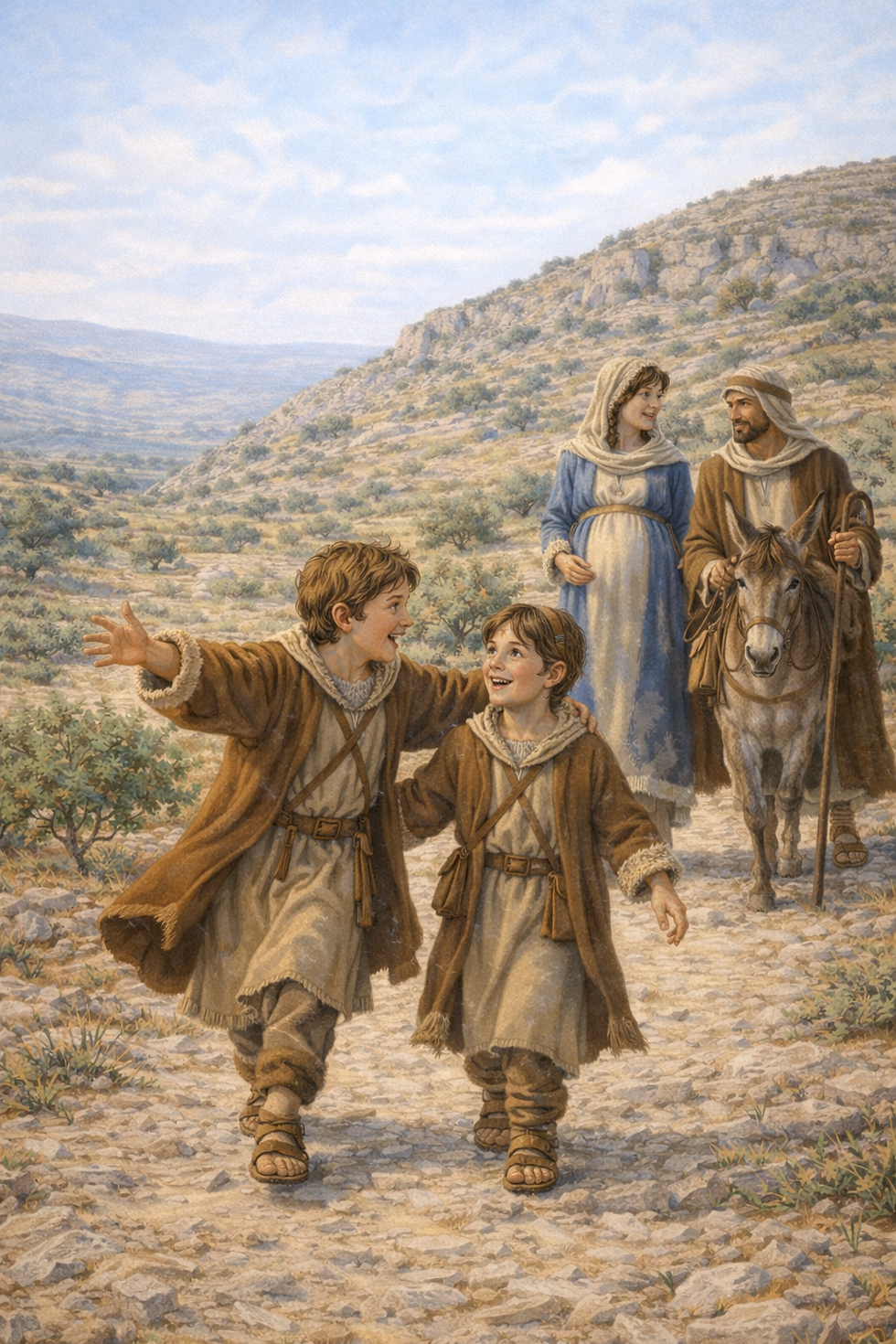
Our four companions continued toward Bethlehem. Marcel walked beside Joseph, who answered his questions with patience and calm. Gabi stayed close to Miriam. When she no longer had the strength to walk, she sat behind Her on the donkey. She listened quietly to the men’s conversation and was generally very silent.

Late in the afternoon, they reached a house set on the slope of a hill, from which stretched a wide, almost endless view toward the distant, blue-outlined Jerusalem Mountains. The clear winter air and cloudless sky made the Judean landscape exceptionally vivid. The half-shadows of olive groves, gentle hills, and silvery gleams of rocky terraces formed an image of a land the Israelites had called for centuries “flowing with milk and honey”—for though it was austere, it offered harvest and life to all who knew how to love it and cultivate it wisely.
Thus God had already promised Moses:
“I will lead you to a land flowing with milk and honey” (Exodus 3:17).
Miriam and Joseph knew this well. Their hearts were filled with gratitude and praise for the Almighty.
The words of Psalm 121 lived within each of them, and the children, hearing it along the way, remembered it too.
With a smile, Gabi teased Marcel:
“I lift up my eyes to the mountains:from where will my help come?”
And he answered her joyfully, running around her with outstretched arms, as if he wanted to protect her:
“My help comes from the Lord,who made heaven and earth.”
And so the first day with Miriam and Joseph came to an end. The Advent’s Way to the House of Bread continues—a journey where every step brings new questions, wonder, and unexpected encounters. Read the next chapter.
The Psalms have accompanied people for centuries on journeys, escapes, returns, and nights spent “on the outskirts.” They were the prayers of pilgrims, families, exiles, and those who had no temple—only the road.
Prayer on the road with the Psalms means allowing God’s Word to go with us, exactly to the places where we are.
Today, repeat the passage from Psalm 121:
“I lift up my eyes to the mountains—where will my help come from? My help comes from the Lord, who made heaven and earth.”


Comments